Jakarta, 7 August 2026 – Amid limited fiscal space and increasingly complex development challenges, local governments are required not only to develop sound plans, but also to orchestrate resources, foster collaboration, and deliver policy innovations that address the specific needs of their respective regions.
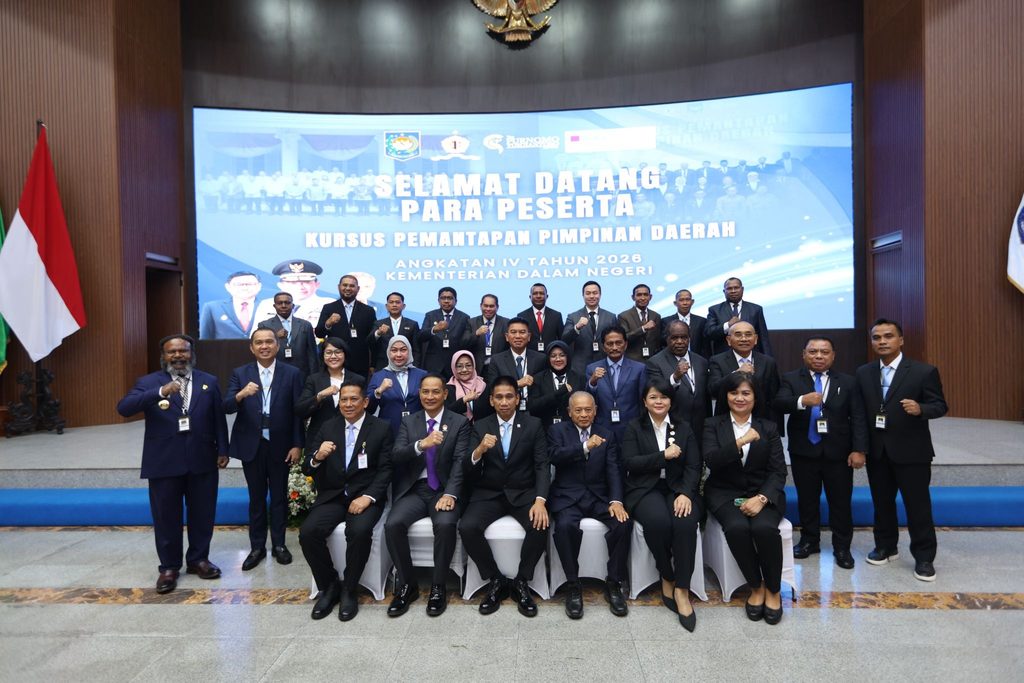
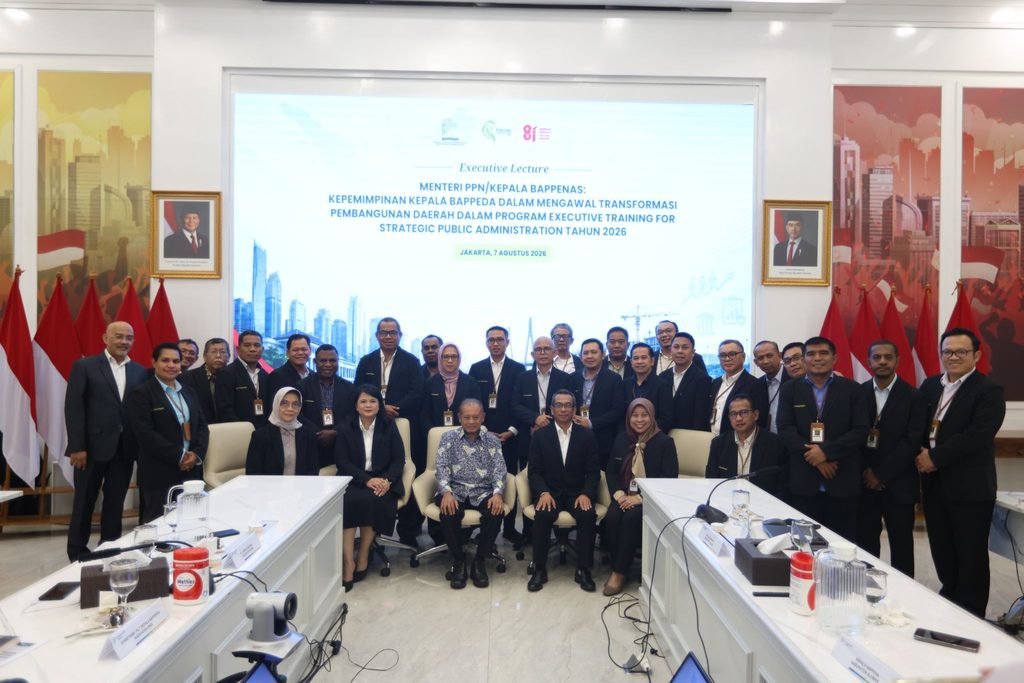
To strengthen these capacities, the Purnomo Yusgiantoro Center (PYC), in collaboration with the Center for the Development, Education, and Training of Planners at the Ministry of National Development Planning/National Development Planning Agency (Ministry of National Development Planning/Bappenas), held the Executive Training for Strategic Public Administration from 3–7 August 2026, in Jakarta.
The program was attended by 24 heads of district and municipal Bappeda (Regional Development Planning Agencies) from various regions across Indonesia. The training was designed to strengthen the role of Bappeda as the strategic hub for regional development, connecting national priorities with local development needs, capacities, and characteristics.
Throughout the program, participants explored a range of key topics, including the role of planners as development orchestrators, innovative financing amid fiscal constraints, policy innovation, and strategic leadership in ensuring that development plans are translated into effective and impactful programs.
Discussions also focused extensively on real-world challenges faced by local governments. Participants examined issues related to the harmonization of central and local government policies, opportunities for innovation in planning and financing, cross-sectoral coordination, and how local governments can respond to strategic issues aligned with national development priorities.
To broaden participants’ perspectives, the program featured speakers from various institutions and professional backgrounds, including senior officials from the Ministry of National Development Planning/Bappenas and the Ministry of Finance, PT Penjaminan Infrastruktur Indonesia (PT PII), academics, and prominent national figures. Among the speakers were Prof. Purnomo Yusgiantoro, Prof. Bambang Brodjonegoro, and Suryo Pratomo (former Ambassador of the Republic of Indonesia to Singapore, 2020–2025).
The learning activities were extended beyond the classroom. Participants also took part in a site visit to Bandung to observe the practical implementation of innovation and technology-based governance. At the Smart City & Community Innovation Center (SCCIC) of the Bandung Institute of Technology (ITB), participants explored the development of smart city research and innovation. Meanwhile, a visit to the Bandung City Department of Communication and Informatics provided insights into smart governance practices and the development of digital public services. The field visit also included a visit to the ITB Museum.
One of the program’s key outputs was the preparation of an action note by each participant. The document addressed development challenges faced in their respective regions and formulated follow-up actions based on the knowledge and insights gained during the training. Through this approach, the program was designed not only to strengthen participants’ knowledge and capacity, but also to generate practical ideas that can be further developed within the context of regional policy and planning.
The program was officially opened by Secretary-General of the Ministry of National Development Planning/Secretary of Bappenas Teni Widuriyanti, together with PYC Chairperson Filda C. Yusgiantoro. During the closing session, Minister of National Development Planning/Head of Bappenas Rachmat Pambudy delivered a session on development leadership, prior to the closing of the the program by PYC Board of Trustees Member and Founder, Prof. Purnomo Yusgiantoro.
Through this program, PYC and Bappenas are encouraging the transformation of regional planners’ roles—from document preparers into strategic policy orchestrators capable of strengthening coordination, identifying financing opportunities, developing innovations, and ensuring that development priorities are effectively translated into action in accordance with the context of each region.